


Graduate Interview, Hanna Seymour
In this brief interview, Dr. Joel Wingo asked Hanna a series of questions about her experience at Redemption Seminary and how that experience is helping with her future plans.
They explored Hanna's motivations for pursuing the degree, her approach to completing it efficiently, and the impact it had on her personal and professional life. Finally, they touched on Hanna's future plans, including the possibility of starting a PhD program and her continued involvement with the Redemption community.
Can Seminary Fit an Already Full Life?
Hanna Seymour wanted deeper biblical and theological training for her work as an author and Bible teacher. What she did not know was whether seminary could fit into a life that already included work, ministry, homeschooling, and three young children.
It did.
By developing a consistent study rhythm, working ahead before her mentoring terms, and using mentor meetings to revisit and reinforce what she had learned, Hanna completed her M.A. in Biblical Studies while continuing the work and family responsibilities already entrusted to her.
“I didn’t think I ever thought I’d be able to fit it in while I had three kids under three and a half years old, but here we are.”
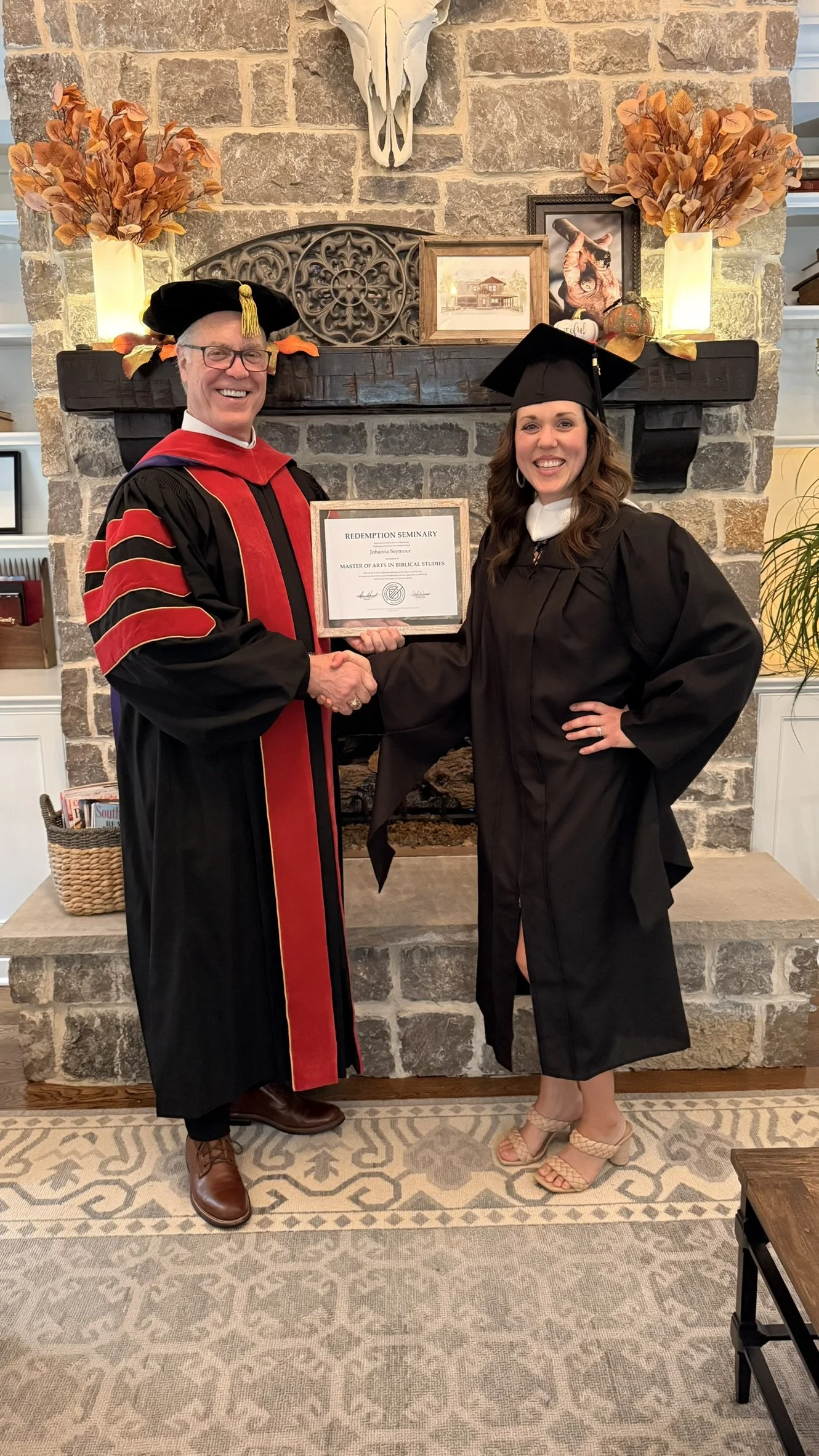
Congratulations to Hanna Seymour!
Hanna graduated with a Master of Arts in Biblical Studies as part of the 2025 graduating class from Redemption Seminary. Hanna is an author, podcast host, and busy mother who is a bright light and a leader in women’s ministries.
Hanna Seymour, M.A. in Biblical Studies graduate · 16-minute interview
-
Hanna explains that teaching Scripture carries significant responsibility. She wanted formal training that would help her handle Scripture carefully and learn from scholars with deeper experience in biblical and theological study.
-
Hanna explains that she began considering Redemption shortly after having her third child. Although theological education had long been part of her plans, she had not expected to pursue it while raising three very young children.
-
Hanna wanted to understand why different Christian traditions interpret certain passages differently. She values being able to describe those positions fairly and converse respectfully about areas where orthodox Christians disagree.
-
Hanna says the program gave her additional tools and resources for exploring theological questions and understanding the major interpretations of difficult biblical passages.
-
Hanna highlights Spiritual Formation for Ministry Leaders because of its emphasis on personal reflection and application. She also describes how another course helped launch the work that eventually became her book Everyday Spiritual Habits.
-
Hanna established consistent study periods in the morning and evening and developed personal deadlines for completing each course. She also deliberately planned breaks around holidays.
-
Hanna preferred completing approximately four weeks of coursework before beginning regular meetings with her mentor-professor. That allowed her to revisit material she had studied earlier rather than encountering everything for the first time during the mentoring term.
-
Hanna reviewed earlier coursework before meeting with her mentor. She found that returning to the material and discussing it again helped reinforce what she had learned and supported longer-term retention.
-
Hanna discusses her plans for continued writing and ministry and the possibility of pursuing a Ph.D. in biblical exposition.
Can seminary fit into an already busy season of life?
When Hanna began considering seminary, she was not looking for something else to fill her schedule.
She had recently had her third child. At the beginning of 2022, she identified three major goals she was considering and prayerfully held them before the Lord, unsure whether she would be able to pursue even one of them. Seminary was one of those possibilities.
Eventually she decided to apply to Redemption.
She already knew that theological education was part of her long-term plan. As an author and Bible teacher, she wanted greater training for the responsibility of teaching Scripture. What surprised her was that she could begin that training during such a demanding season of family life.
“I knew I wanted to pursue a seminary degree just for greater training to help me as I’m writing books and Bible studies and teaching the Bible.”
Why pursue formal biblical training when you are already teaching?
Hanna had already earned undergraduate and graduate degrees and was actively writing and teaching. Her motivation for seminary was not simply adding another credential.
She points to the responsibility Scripture places on teachers. If she was going to open God’s Word and teach others, she wanted to do her due diligence—to be trained by people who had spent years studying Scripture, theology, and biblical interpretation.
For Hanna, graduate theological education provided a structured way to deepen both her knowledge and her ability to know where to turn when difficult interpretive questions arise.
By the end of the program, she says she had many more tools for investigating biblical questions and explaining the major interpretations of challenging passages.
What is it like studying theology in an interdenominational seminary?
Hanna was already accustomed to serving among Christians from different denominational backgrounds. That made Redemption’s interdenominational setting particularly attractive to her.
Rather than simply learning that Christians disagree about a passage or doctrine, she wanted to understand why different Christian traditions reach their conclusions.
That approach also reflects the way she teaches.
Hanna explains that when she encounters a passage with several historic interpretations within orthodox Christianity, she wants to understand and represent those positions fairly—even when she ultimately holds a particular view herself.
For her, learning how Christians can respectfully discuss secondary theological differences was an important part of theological education.
Did seminary actually affect Hanna’s writing and ministry?
Yes—and sometimes in unexpected ways.
One of the courses Hanna continues to reference most frequently is Spiritual Formation for Ministry Leaders. She describes the personal reflection and application in that course as important groundwork for the rest of her studies.
Another course asked her to study the needs of a ministry community and consider an appropriate biblical response. That work directly contributed to the development of her book Everyday Spiritual Habits.
“That class really launched the next book that I wrote.”
For Hanna, coursework did not remain isolated from her existing ministry. What she was studying became material she could use in writing, teaching, discipleship, and her own spiritual formation.
Check out these books written by Hanna.


Watch the Fox News Interview
How did Hanna make time for seminary?
Hanna’s answer is practical: she established a schedule.
She set aside consistent study time in the morning and again in the evening, generally working on coursework about six days each week. With several jobs, children, homeschooling, writing, and ministry responsibilities competing for her time, she learned to determine in advance when the work would happen.
“Once I really figured out when I would do the work and what my personal deadlines would be for each course, it’s kind of just like a paint by numbers.”
She also planned breaks. Instead of expecting seminary work to continue uninterrupted through every season, she deliberately scheduled time away during Christmas and early January.
Her experience illustrates an important feature of Redemption’s model: flexibility does not have to mean working without structure. Students can develop a schedule that fits their responsibilities and then work consistently within it.
Should you complete coursework before meeting with your mentor?
Hanna found a rhythm that worked particularly well for her: working several weeks ahead before beginning regular meetings with her mentor-professor.
“I really like to do four—probably about four weeks—of a course in advance before I actually started meeting with my mentor professor.”
Redemption students have flexibility in how they coordinate self-paced preparation with their eight-week mentoring term. Hanna preferred completing a substantial portion of the course first and then using mentor meetings to revisit material she had already studied.
For her, that separation between preparation and mentoring had an additional benefit.
Can mentor meetings help you retain what you studied?
Hanna discovered that preparing ahead allowed her mentor meetings to function as more than a first exposure to the material.
Before each meeting, she would return to work she had completed several weeks earlier and review it. Then she would discuss that material with her mentor-professor.
That repeated engagement helped reinforce her learning.
“For me, it was a way to kind of reinforce what I had already learned.”
Hanna notes that she has a strong short-term memory, but long-term retention requires more effort. Revisiting material before a mentor conversation gave her another opportunity to retrieve, discuss, and reintegrate what she had studied.
That is one reason she appreciated working ahead: instead of studying a topic and immediately moving on, the mentoring process brought her back to it.
Does flexible online learning mean studying alone?
Hanna’s experience demonstrates the distinction between self-paced preparation and independent learning.
She could determine when to complete her coursework and could prepare several weeks ahead. But that preparation ultimately led into regular conversations with a mentor-professor.
The result was a rhythm of:
Study → review → conversation → reinforcement
Rather than replacing faculty interaction, self-paced preparation gave Hanna material to bring into those conversations.
When she first applied to Redemption, she identified this combination as one of the primary reasons the program appealed to her: the flexibility of self-paced online study combined with the “high-touch” experience of weekly mentoring.
What did completing the degree mean to Hanna and her family?
Hanna’s family and friends marked her graduation in a memorable way.
More than twenty people who had supported her during the program gathered at her home. Hanna wore her graduation regalia, her husband played “Pomp and Circumstance,” and her father—a former Bible college president—put on his own academic regalia and ceremonially presented her diploma.
What began partly as a lighthearted home graduation became an opportunity for Hanna to thank the people who had helped her complete the degree.
She described it simply as:
“Truly one of the best nights of my life.”
The celebration reflected something important about completing graduate education while carrying significant family, work, and ministry responsibilities: although Hanna completed the academic work, many people had encouraged and supported her along the way.
What comes after the M.A.?
Completing the Master of Arts in Biblical Studies was not the end of Hanna’s theological education.
At the time of her graduate interview, she was considering pursuing a Ph.D. in biblical exposition. She also planned to continue writing and teaching, carrying what she learned at Redemption into the ministries she was already pursuing.
Her experience demonstrates what theological education can look like when it is integrated into an existing calling rather than separated from it.
Congratulations to Hanna Seymour!
Congratulations to Hanna Seymour, a member of Redemption Seminary’s 2025 graduating class, on completing her Master of Arts in Biblical Studies.
Hanna pursued theological education while raising a young family, writing, teaching, homeschooling, and serving in ministry. Her disciplined approach to preparation and her intentional use of mentor conversations provide a helpful example of how Redemption’s self-paced, mentor-based model can be incorporated into an already full life.
We look forward to seeing how Hanna continues to use her biblical and theological training through writing, teaching, discipleship, and further study.
Explore your next step
Whether you’re discerning a ministry direction or simply want to study Scripture more deeply, Redemption can help you understand the options available to you.
Considering your first course?
Explore the Master of Arts in Biblical Studies and answers to common admissions questions. Hanna’s story is one graduate’s experience; the program pages explain current requirements and options.
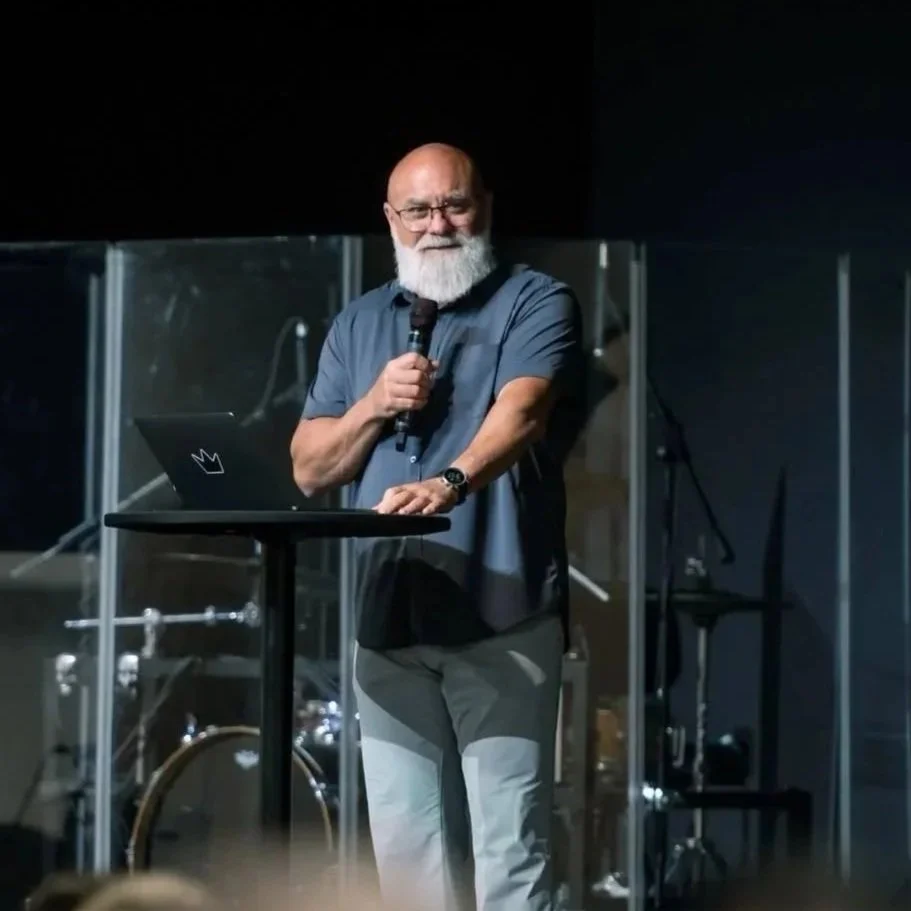
Graduate Interview, Adam Driggers
Adam Driggers already spent hours studying Scripture and was not convinced seminary would add enough to make the commitment worthwhile. What he found surprised him: the program was more enjoyable than he expected, pushed him into deeper academic study, sharpened his thinking, and helped him communicate biblical ideas with greater clarity. In his graduate interview, Adam explains how that growth happened—and how he made seminary fit into an already full life.
From Independent Bible Study to Deeper Theological Training
Adam Driggers was already a serious student of Scripture before enrolling at Redemption Seminary.
He had grown up in the church, but beginning in 2017 his personal Bible study became increasingly intensive. Daily devotions grew into hours of reading and study. At the same time, Adam and his wife were running two businesses and serving actively in their church.
An executive pastor eventually pointed out something important: Adam was already investing substantial time in biblical study. Formal theological education could give that work greater structure, direction, and academic depth.
That suggestion eventually led Adam to Redemption Seminary.
“It was really just plugging in the coursework from Redemption in place of what I was studying on my own.”
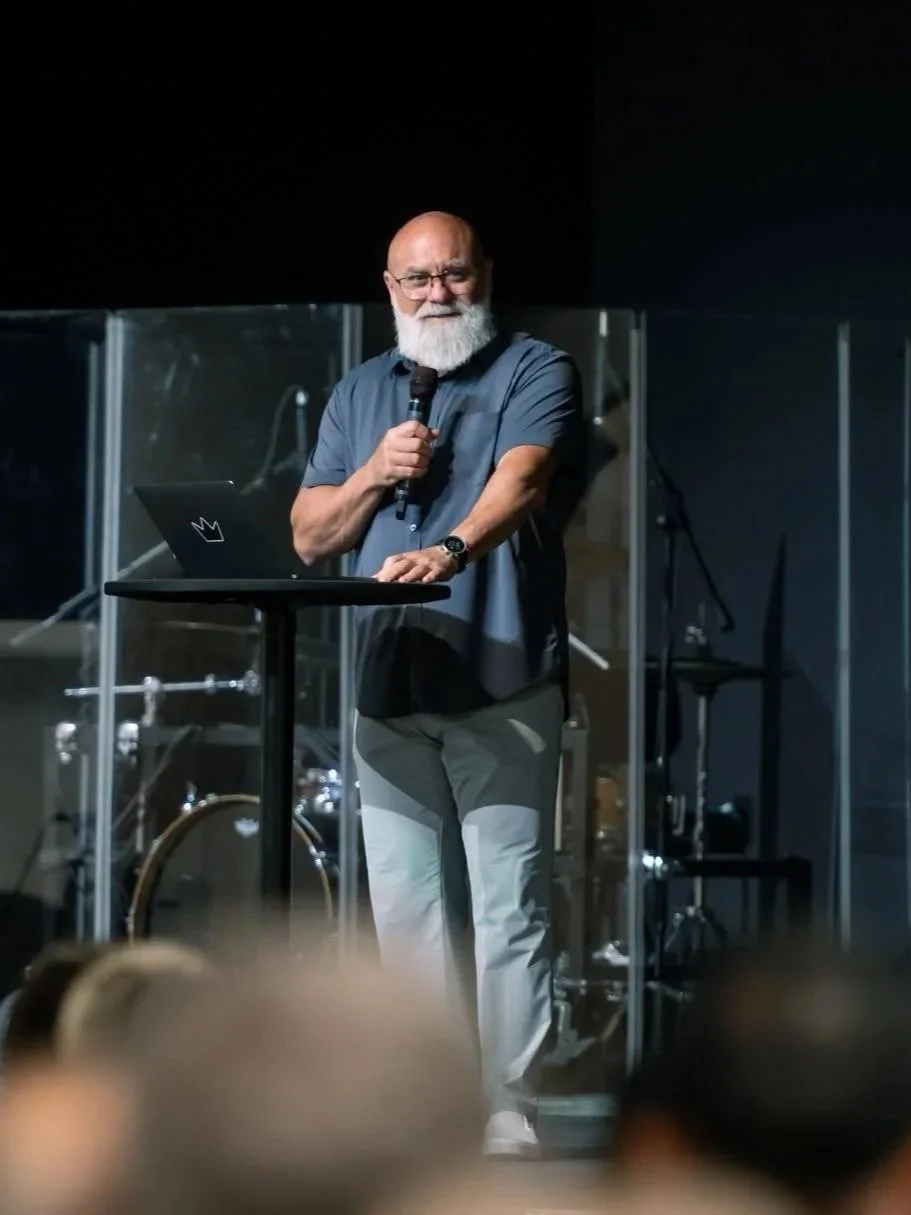
Congratulations to Adam Driggers!
Adam graduated from Redemption Seminary with a Master of Arts in Biblical Studies as part of the 2025 graduating class. In addition to owning a business, Adam serves as a board member of the AWKNG School of Theology (ASOT), a teaching pastor, an author, and the owner of a theology website (Beneath the Surface). See all of the details.
-
Adam explains how years of increasingly serious Bible study led an executive pastor to encourage him toward formal theological education.
-
Adam describes redirecting time he was already spending in Bible study toward structured coursework.
-
Adam discusses one of his original concerns about seminary and how the experience compared with choosing his own study topics.
-
Adam explains how his final writing course and mentor conversations improved his ability to organize and present what he had learned.
-
Adam describes developing a discipleship project connected to the needs of his congregation.
-
He explains why he initially completed 50–70% of his coursework before beginning mentor meetings and how his pace changed over time.
-
Adam encourages students to take the commitment seriously and explains how existing Bible-study time can be redirected into formal study.
-
Adam describes his increased ability to engage academic scholarship and a broader range of study resources.
Why pursue seminary when you are already studying the Bible?
Adam did not enroll because he needed someone to persuade him to read Scripture.
He was already spending significant time studying on his own. What seminary offered was a structured course of study, guidance from experienced faculty, and the opportunity to broaden the range and depth of material he was engaging with.
Adam admits that one of his concerns was whether prescribed coursework would be as interesting as choosing his own subjects. For most of the program, that concern proved unfounded.
Instead, formal study exposed him to subjects, scholars, and resources he might not have chosen on his own.
Can seminary fit into an already busy life?
Adam and his wife own two businesses and serve in their church, so adding graduate education required intentionality.
But Adam had already established a regular study habit.
Rather than adding an entirely separate academic life to his existing commitments, he redirected much of the time he had already been devoting to independent Bible study toward his Redemption coursework.
His advice to prospective students reflects that experience:
“You don’t have to add extra hours on top of your life if you already spend time studying or in devotions—just redirect that focus toward the program.”
For students who are already serious about learning Scripture, seminary can provide structure and accountability to time they are already investing.
How did Adam prepare for mentor meetings?
Early in the program, Adam preferred to complete a substantial portion of the course material before beginning his mentoring term.
“I didn’t schedule mentor meetings until I was 50% to 70% done, then worked through the last modules while mentoring.”
That rhythm allowed him to simply review his previous work before each mentor session while continuing to work through later course material throughout the mentoring term.
As Adam became more comfortable with the program, he adjusted his pace and eventually worked through multiple courses concurrently.
The flexibility allowed him to discover what worked with the rest of his life rather than following a single prescribed pace.
Did the mentoring conversations improve his ability to communicate?
One of Adam’s favorite courses turned out to be the final writing course.
Working with Dr. Raymond, Adam was able to take what he was learning and present it during mentor meetings almost like a short message.
“He allowed me to consume the information and present it in our mentoring sessions almost like a mini-message.”
That process helped Adam move beyond simply understanding information. He had to organize it, explain it clearly, and communicate it to another person.
Looking back, Adam says:
“That class really helped me hone that skill into presenting far better than I was prior to that class.”
This illustrates an important part of Redemption’s mentoring model: students prepare independently, but then they are asked to articulate, discuss, and apply what they have learned in conversation with a mentor-professor.
How did Adam apply his studies to his church?
Adam’s final project addressed a real ministry need.
His church had functioned as a mobile congregation for about ten years and had limited space for traditional Sunday school and discipleship programs.
Adam developed a project focused on creating a stronger discipleship ministry for the church.
His work centered on explaining why robust discipleship, faithfulness, and obedience matter and how a congregation could develop a more intentional approach.
Rather than completing an abstract academic exercise, Adam used his coursework to think through an actual ministry challenge in the church where he already served.
How quickly did he complete the program?
Adam completed the degree in just over two years, including a period when circumstances outside his control required him to step away temporarily.
Once he returned, he completed the remaining work in approximately eighteen months.
But speed was not his primary concern.
“That was a good pace to reflect on and process the material rather than just rushing through it.”
His experience illustrates one of the advantages of Redemption’s model: students can move at a pace that accommodates their responsibilities while still allowing time for reflection and meaningful engagement with the material.
Where did Adam experience the greatest academic growth?
Adam says one of the most significant changes was the level of material he became comfortable reading.
“I’m now engaging at a much deeper level with scholars and academic material.”
His studies introduced him to a wider range of academic resources and perspectives than he had previously encountered in independent study.
For Adam, the result was not simply more information. It was an expanded ability to engage serious biblical and theological scholarship for himself.
What advice does Adam give prospective students?
Adam doesn’t downplay the commitment required. Although students design their own study schedules, they still must prioritize study time to ensure they actually do it. Some do this by considering it part of their regular devotional time.
His advice is straightforward:
“Take it seriously, and push forward.”
Redemption’s flexible model still requires discipline and sustained effort.
But Adam’s experience demonstrates that students who are already committed to serious biblical study may be able to redirect that existing habit into a structured graduate program.
For him, the result was deeper engagement with scholarship, stronger communication skills, greater structure in his study, and practical application in the church where he serves.
Congratulations to Adam Driggers
Congratulations to Adam Driggers on completing the Master of Arts in Biblical Studies.
Adam entered Redemption as an experienced Bible student already serving faithfully in his church. Through the program, he expanded the depth of his academic reading, developed his ability to communicate what he was learning, and applied his studies to practical discipleship needs in his congregation.
His experience is a helpful example of how structured theological education can build on an existing habit of serious Bible study and prepare students to serve more effectively where the Lord has already placed them.
Check Out Some of Adam’s Current and Recent Ministry Contributions
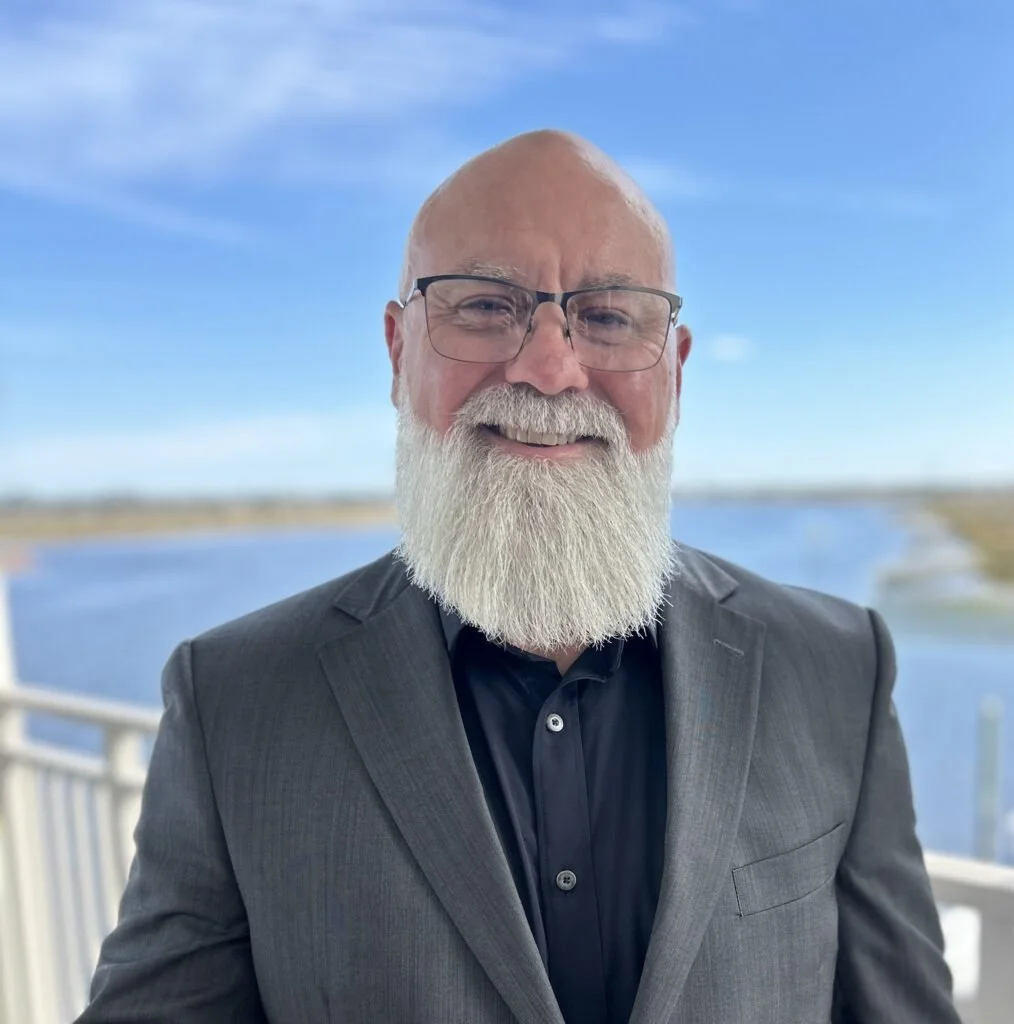
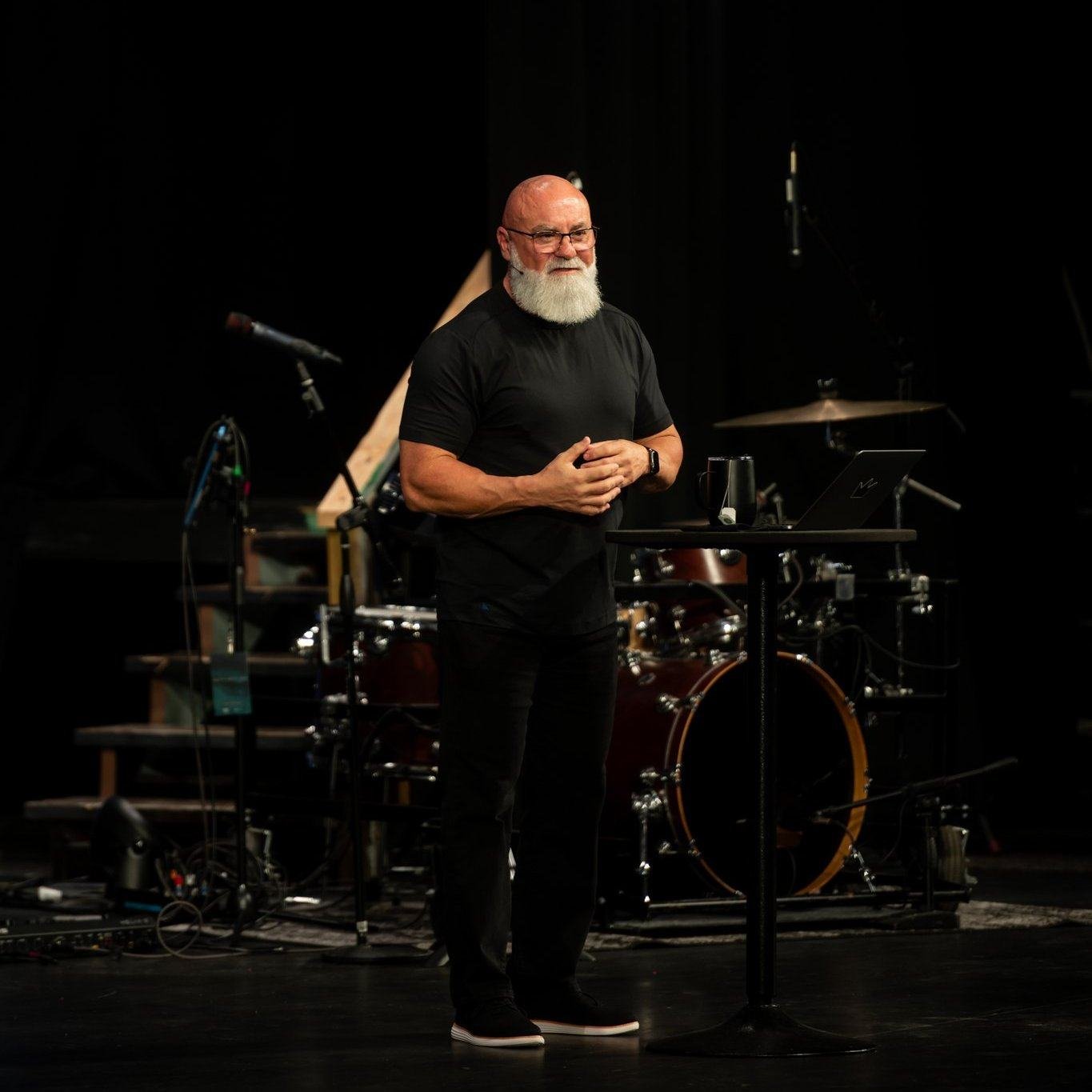
Biblical Teaching · Writing · Study
Teaching Pastor
“I really enjoyed it and am glad that I heard about it through the AWKNG School of Theology. ”
The Story Behind the Story
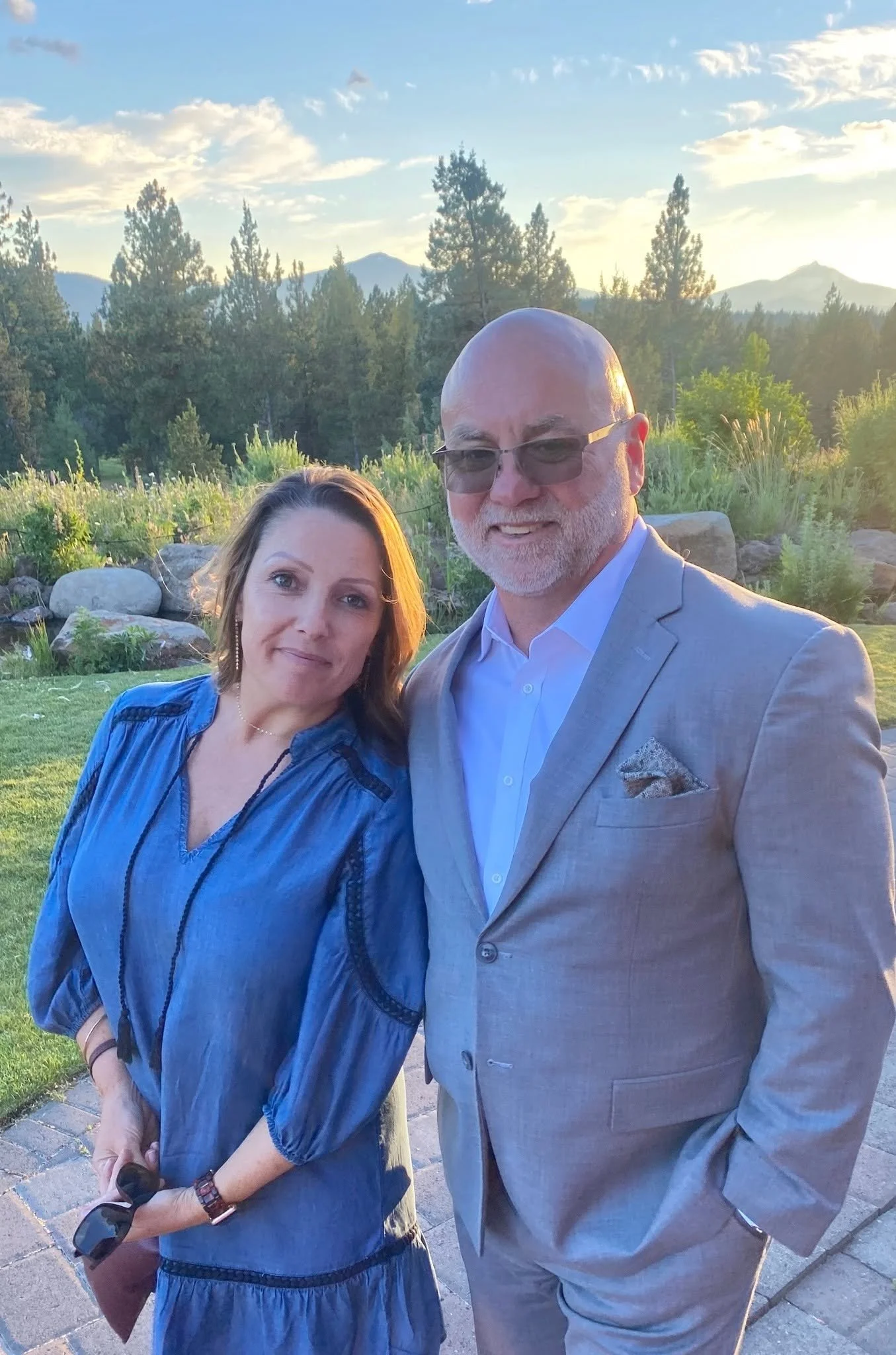
Adam has been rooted in the life of the church since childhood and has faithfully served the local body throughout his adult life. Since marrying in 1994, he has invested in the church through a wide range of ministries—ushering, greeting, teaching Sunday School, and leading numerous small-group classes. His most formative season of service was in youth ministry, where he and his wife discipled students, including the young man who would later become their current pastor.
After he completed college, returned home, and eventually planted a church, Adam and his wife joined the new congregation to support the work. Adam now serves as a board member and elder, teaches and preaches several times each year, and maintains regular communication with the pastoral staff to encourage, support, and assist them as needs arise. He and his wife remain active in small groups, and Adam also provides leadership by helping guide a weekly men’s Bible study. Through steady, relational, and humble service, Adam continues to advance the kingdom in meaningful and lasting ways.
Explore your next step
Whether you’re discerning a ministry direction or simply want to study Scripture more deeply, Redemption can help you understand the options available to you.
Considering your first course?
Explore the Master of Arts in Biblical Studies and answers to common admissions questions. Hanna’s story is one graduate’s experience; the program pages explain current requirements and options.

Daniel from Arizona
My hope is that, through acquiring a MABS through Redemption Seminary, I will be able to provide a higher level of training/teaching to the local church. Many people within the local church are unable to enroll in Bible college, seminary, or even a certificate program. Therefore, I’m eager to help equip the church in a way that most don’t have access to.
After being converted in 1999, I immediately became involved in the local church ministry. My father was attending Harvest Christian Fellowship in Riverside, California, where I too began to attend. I started to serve on the ushering team where I was responsible to seat service attendees, serve communion, answer basic questions about the church’s facilities, etc. During that time I was asked to take over as head usher and was responsible for leading a team to provide security and standard usher services.
Later, my wife and I decided to find a local church in our area that was similar to our doctrinal positions. Calvary Chapel seemed to be the best fit so we joined Calvary Chapel Wildwood. There I developed a “call” to ministry. I eventually was asked to lead the Acts 242 ministry where I oversaw all of the small groups. I ultimately decided to jump back into ministry where I took on the role (not the title) of a pastor, but due to some conflicting doctrinal beliefs (primarily, my view on soteriology), my wife and I were forced to leave a church that we loved.
Based on the advice of some close confidants and pastors, I enrolled in the Applied Theology Program and California Baptist University. It was there that my love for theology and scholarship blossomed. I also applied at a small, local Southern Baptist Church where I was hired as the director of Children’s and Young Adult Ministries. I preached my first sermon in front of a church full of people who were very gracious to a young (and immature!) aspiring pastor who had no business preaching in front of farm animals let alone human beings. During that enriching time, my wife and I found out that she was suffering from low blood pressure and was unable to work her standard hours and I needed to find full-time employment in order to pay our bills. I ended up resigning from my position and took a full-time position outside of the church.
My hope is that, through acquiring a MABS through Redemption Seminary, I will be able to provide a higher level of training/teaching to the local church. Many people within the local church are unable to enroll in Bible college, seminary, or even a certificate program. Therefore, I’m eager to help equip the church in a way that most don’t have access to.

Jeff from Texas
I would encourage students who are not familiar with Redemption Seminary to compare Redemption’s model to other seminary models to determine what is the best fit for them. I suspect there are a lot of people in the same position as me, working full-time jobs and unable to attend weekday classes that most seminaries offer.
I began in ministry and preaching at the age of 17 in my home church in Illinois. I was in this church from the age of four until I moved to Dallas at age 36. I never held an official position in this church. The church ran around 150 on Sundays. The only ministry positions were the father and son pastors. I was content in the role for many years, but after visiting Dallas, I began to feel a call to plant a church in the Dallas Metroplex. It took a couple of years to work through this calling. Eventually, our family moved to the Dallas area to work with a church that had a vision of becoming a multi-campus church.
My desire is to plant a church where corporate worship is centered around the public reading of Scripture, congregational singing, corporate prayer, and expository preaching. I realize this may sound highly idealized (and it no doubt is), but I believe the redemptive purposes of God will be most effectively fulfilled in churches that honor his Word.
I have been exploring several options to further my education. I did not want to be part of a program that allowed me to earn a degree without actually helping further my personal spiritual development. I’m excited to be part of a seminary that will not only help me earn a degree, but is also interested in helping me grow personally and spiritually.
I appreciate the model that Redemption Seminary offers in terms of aligning continuing education with the pursuit of ministry. Rather than treat a theological education like a secular pursuit, the concept of having students work with mentors that can help guide and coach has a great deal of appeal with me.
I would encourage students who are not familiar with Redemption Seminary to compare Redemption’s model to other seminary models to determine what is the best fit for them. I suspect there are a lot of people in the same position as me, working full-time jobs and unable to attend weekday classes that most seminaries offer.